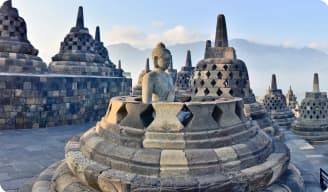
Indonesia es uno de los destinos de viaje más populares del mundo, y no es de extrañar por qué. El país tiene una gran variedad de paisajes, desde las playas de Bali hasta las montañas de Java, y también es un lugar muy accesible, con vuelos directos desde muchas ciudades del mundo. Sin embargo, el precio de los viajes a Indonesia puede ser un poco intimidante, especialmente si no se planea con anticipación. Aquí hay algunos consejos para ayudar a ahorrar dinero en un viaje a Indonesia.
Indonesia es un país muy económico para visitar. Los vuelos son generalmente baratos, y una vez que estás en el país, puedes vivir muy bien con un presupuesto moderado. Los alojamientos son generalmente baratos, y comer también es muy asequible. Hay muchas cosas gratis para hacer en Indonesia, como visitar templos y playas.
¿Cuánto dinero se necesita para viajar a Indonesia?
Para viajar a Indonesia, se necesita un mínimo de 1000 dólares americanos por persona. Este monto puede variar dependiendo de los gastos personales y el itinerario de viaje. Por ejemplo, si se desea realizar actividades como el buceo o el rafting, se necesitará un presupuesto adicional. Indonesia es un país relativamente barato para visitar, ya que la mayoría de los alojamientos, comidas y transportes son asequibles.
¿Qué es más caro Indonesia o Tailandia?
Indonesia is generally more expensive than Thailand, especially in big cities like Jakarta and Bali. Prices for accommodation, food, and transportation are all higher in Indonesia, although you can find cheaper options if you’re willing to sacrifice some comfort. For travelers, Thailand is generally the better value for money destination.
¿Cuánto cobran en Indonesia?
Indonesia is a country located in Southeast Asia. The country has a population of over 261 million people, making it the fourth most populous country in the world. The Indonesian economy is the 16th largest in the world, with a GDP of $1.03 trillion. Indonesia is a member of the G20, and is classified as a newly industrialised country.
The minimum wage in Indonesia is 2.4 million rupiah per month ($170), which was increased from 2.2 million rupiah in 2016. The minimum wage is set by the government and is reviewed every year. There is also a regional minimum wage, which is set by each province. The minimum wage in Jakarta, for example, is 3.6 million rupiah per month.
Indonesia has a progressive tax system, with tax rates ranging from 0% to 30%. The corporate tax rate is 20%.
In Indonesia, the average monthly salary is 10.6 million rupiah ($750). Salaries vary depending on factors such as experience, education, industry, and location. For example, salaries in Jakarta are generally higher than in other parts of the country.
The cost of living in Indonesia is relatively low. For example, a meal at a restaurant can cost as little as $2.50. Transportation costs are also low, with a one-way ticket on the Jakarta MRT costing $0.50.
Overall, Indonesia is a relatively affordable country to live in.
¿Cuál es la mejor epoca para ir a Indonesia?
Indonesia is a Southeast Asian country located between the Indian and Pacific oceans. It consists of more than 17,000 islands, making it the world’s largest archipelago. Indonesia is a republic with a presidential system and an elected legislature. The nation’s capital city is Jakarta.
The Indonesian economy is the 16th largest in the world by nominal GDP and the 7th largest by GDP at PPP. Indonesia is a member of the G-20 major economies and a founding member of the Association of Southeast Asian Nations (ASEAN). The Indonesian archipelago has been an important region for trade since at least the 7th century, when Srivijaya and then later Majapahit traded with China and India. Local rulers gradually absorbed foreign cultural, religious and political models from the early centuries CE, and Hindu and Buddhist kingdoms flourished. Indonesian history has been influenced by foreign powers drawn to its natural resources. Muslim traders brought the now-dominant Islam, while European powers brought Christianity and fought one another to monopolise trade in the Spice Islands of Maluku during the Age of Discovery. Following three and a half centuries of Dutch colonialism, Indonesia secured its independence in 1949.
Indonesia consists of hundreds of ethnic groups, with the largest—and politically dominant—ethnic group being the Javanese. A shared identity has developed, defined by a national language, ethnic diversity, religious pluralism within a majority Muslim population, and a history of colonialism and rebellion against it. Indonesia’s national motto, «Bhinneka Tunggal Ika» («Unity in Diversity» literally, «many, yet one»), articulates the diversity that shapes the country. Despite its large population and densely populated regions, Indonesia has vast areas of wilderness that support the world’s second highest level of biodiversity. The country has abundant natural resources, yet poverty remains widespread.
The Indonesian people have many festivals and celebrations. Some are religious, such as Eid al-Fitr, which marks the end of Ramadan, and Christmas. Others are cultural, such as the Balinese Hindu festival of Nyepi, and the Day of Silence, which is observed throughout the country.
The best time to visit Indonesia depends on where you want to go and what you want to do. The peak tourist season is between June and September, when the weather is dry and sunny. However, this is also the time when prices are at their highest. If you’re on a budget, you may want to visit during the shoulder season (April-May or October-November), when prices are lower but the weather is still good.
Indonesia es un país increíblemente diverso, con una gran variedad de paisajes, culturas y experiencias. Aunque puede ser costoso, vale la pena visitar Indonesia por su belleza natural, sus increíbles playas y su gente amable.
Indonesia es un país muy económico para visitar. Los hoteles y hostales son muy baratos, y la comida es muy asequible. También hay muchas actividades gratuitas o de bajo costo, como visitar templos y playas.